
Upcoming Farmland Available For Rent
Which Saskatchewan RMs Have
the Highest Farmland
Rental Rates?
Saskatchewan farmland rental rates are a "dark market" — no public database has existed since the government stopped publishing leasing surveys in 2019. Cash rents across the province range from $40/acre in marginal dryland areas to over $160/acre in top-producing northeast and northwest black soil zones. This article breaks down rental rate expectations by region and soil zone, explains the key drivers that push rates up or down within specific RMs, and explains why ExtrAcre's competitive auction results are the most accurate real-time benchmark available.
Ask any Saskatchewan landowner what cash rent their neighbour is getting and they'll likely shrug. Farmland rental rates in Saskatchewan are what experts call a "dark market" — privately negotiated between landlord and tenant, rarely disclosed, and with no reliable public database since the provincial government stopped publishing leasing surveys in 2019.
This creates a significant information asymmetry: landowners who don't know their land's true market rental value routinely leave money on the table, while farmers who overpay on informal private deals erode their margins. The result is a market where the same soil class in adjacent RMs can command rental rates that differ by 20–40% — simply because one party had better information than the other.
"Nailing down the land rental rates in a particular part of the Prairies is not easy. The last time Saskatchewan published a survey was 2019, so rental rates in those publications are out of date and under-valued. Renting that same farmland could be 40 to 50 per cent more expensive in 2025."
— Western Producer / Manitoba Agriculture farm management specialist, January 2025What Drives Rental Rates in a Specific RM?
Rental rates are ultimately set by what farmers can afford to pay while still profitably farming the land. This means the four key drivers are:
1. Soil productivity class — The SAMA (Saskatchewan Assessment Management Agency) soil class is the most important single factor. Class 1 and 2 Black soil land in the northeast and northwest consistently commands the highest rents because it produces the highest yields per acre of canola, wheat, and pulse crops. Class 5 and 6 Brown soil land in the southwest — prone to drought and lower yields — commands the lowest rents.
2. Crop type suitability — Canola is Saskatchewan's highest-margin crop. Land capable of reliably producing 40–50 bu/acre of canola commands significant premium rent over land limited to lower-margin cereals. The Black soil zone of northeastern and west-central Saskatchewan is prime canola country.
3. Competition among farmers — In tight RM markets where multiple farmers are competing for the same parcel, competitive bidding drives rents to true market levels. In markets with a single dominant local farmer, informal private negotiations tend to produce below-market rents. ExtrAcre's auction model resolves this by creating transparent competitive bidding in any RM.
4. Land value — The FCC rent-to-price ratio (2.9% average in 2025) means higher-value land commands higher absolute rents. Northeast Saskatchewan land at $4,800/acre generates an estimated $130–$140/acre at the average ratio — far above southwest land at $2,600/acre generating $70–$80/acre.
Saskatchewan Rental Rates by Region
Using FCC's 2025 regional land values and applying the provincial RP ratio range (1.6%–4.4%, average 2.9%), here are estimated cash rental rate ranges by region. These are benchmarks — actual rates in specific RMs depend on local competition, soil class, and lease history.
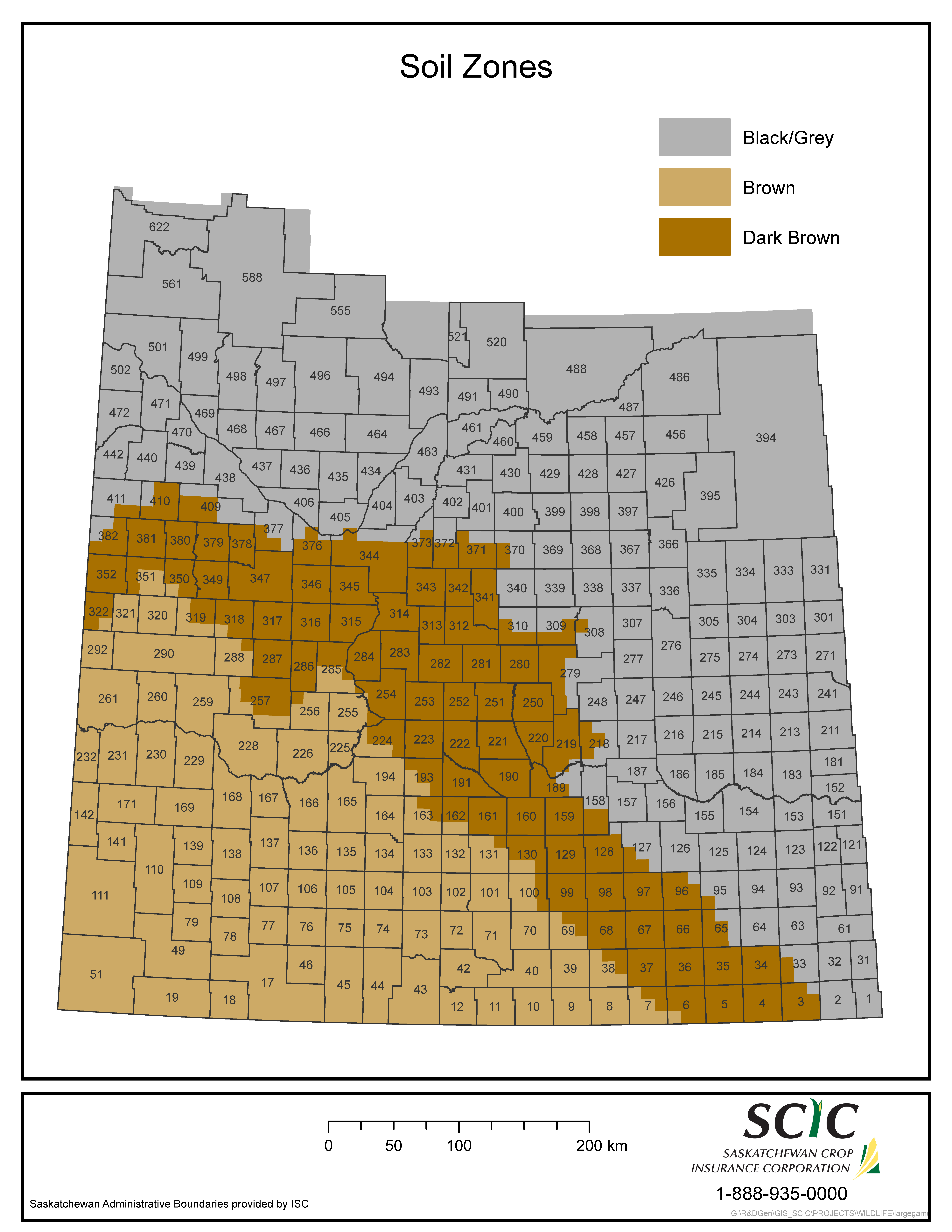
Key RMs: RM 362 (Melfort area), RM 403 (Rosthern), RM 367 (Ponass Lake), RM 228 (Hudson Bay area), RM 342 (Colonsay), RM 215 (Stanley — Melville area)
Key RMs: RM 458 (Meadow Lake area), RM 490 (Loon Lake), RM 427 (Turtle River), RM 482 (Meeting Lake), RM 494 (Spiritwood area)
Key RMs: RM 250 (Perdue/Biggar area), RM 282 (Biggar), RM 333 (Wilkie), RM 287 (Unity), RM 320 (Battleford area), RM 100 (Kindersley area)
Key RMs: RM 232 (Saltcoats area), RM 220 (Langenburg), RM 257 (Yorkton area), RM 229 (Spy Hill area), RM 223 (Churchbridge)
Key RMs: RM 156 (Estevan area), RM 187 (Weyburn), RM 70 (Assiniboia area), RM 61 (Moose Jaw area), RM 69 (Chaplin area)
Key RMs: RM 137 (Swift Current area), RM 142 (Herbert area), RM 72 (Shaunavon), RM 65 (Maple Creek area), RM 337 (Rosetown area)
The Data in One Table: Region vs. Estimated Cash Rent
| Region | Soil Zone | Avg Land Value | Est. Cash Rent | RP Ratio Range | 2024 Appreciation |
|---|---|---|---|---|---|
| Northeast SK | Grey / Black | ~$4,800/ac | $120–$160+ | 2.8–3.4% | +17.9% |
| Northwest SK | Black / Dark Brown | ~$3,500/ac | $110–$150 | 2.9–4.2% | +19.9% |
| West Central SK | Dark Brown / Black | ~$3,500/ac | $100–$140 | 2.9–4.0% | +17.8% |
| East Central SK | Black / Grey | ~$3,800/ac | $95–$130 | 2.6–3.5% | +17.9% |
| Southeast SK | Dark Brown / Black | ~$3,200/ac | $85–$120 | 2.4–3.8% | +11.1% |
| Southwest SK | Brown | ~$2,600/ac | $45–$90 | 1.6–3.5% | +4.1% |
Sources: FCC 2025 Farmland Values Report; FCC 2025 Rental Rate Report (RP ratio avg 2.9%, range 1.6–4.4%); 2026 Saskatchewan Ministry soil zone data. Estimates calculated by applying regional RP ratio range to FCC land values. ExtrAcre auction results for specific RMs may differ significantly from these regional estimates.
Why the Same Region Can Have Very Different Rates
The regional ranges above mask enormous variation within each region. In west-central Saskatchewan, for example, a quarter of Class 2 Black soil near a grain elevator in RM 250 might rent for $140/acre — while a quarter of Class 4 Dark Brown soil in the same RM with drainage issues might rent for $80/acre. Three factors drive this within-RM spread:
Soil class and productivity — SAMA assessment class is the single best within-RM predictor of rental rate. Request a SAMA soil assessment for any parcel before setting a rental rate or making a purchase offer.
Competitive pressure — RMs with multiple active grain farmers (Rosthern, Biggar, Melfort, Yorkton) see genuine competitive bidding that drives rents toward true market value. More remote or lower-productivity RMs with fewer competing farmers see private negotiations that can be 20–30% below market.
Proximity to infrastructure — land within trucking distance of a major grain terminal, elevator, or processing facility commands a meaningful premium — farmers can reduce freight costs, improving their margin and capacity to pay rent.
What This Means for Landowners
If your land is in the northeast, northwest, or west-central regions and you are currently receiving informal private rental rates negotiated years ago, there is a meaningful probability that you are collecting significantly below-market rent. The 40–50% increase in farmland values since 2019 has been accompanied by similar increases in competitive rental rates — but only where landlords have actively renegotiated or run competitive processes.
The most effective way to discover your land's true market rental rate is to run a competitive auction through ExtrAcre. The winning bid is the market rate — set by multiple qualified farmers bidding against each other, not by a single tenant's negotiating position.
Find Out What Your RM Is Actually Paying
ExtrAcre's free rental appraisal provides a rental rate estimate for your specific parcel based on real competitive auction results from your RM — the most accurate benchmark available in Saskatchewan.
Submit your land details — RM number, legal description, soil class, and acreage — and we'll provide a current market rate estimate at no cost and with no obligation.
Which Saskatchewan RMs have the highest farmland rental rates?
Cash rents range from about $45/acre in the Brown soil southwest to over $160/acre in the northeast Black soil zones. The highest rates cluster in the most productive Black soil RMs, driven by soil quality, moisture, and crop yield potential.
What drives rental rates in a specific Saskatchewan RM?
Four key drivers determine RM-level rental rates: soil zone and quality, moisture and growing conditions, field efficiency and parcel size, and local competitive demand from farmers in that specific region.
Why can the same region have very different rental rates?
Even within one RM, rates vary because individual parcels differ in soil class, drainage, field shape, and accessibility. Two quarters in the same RM can rent very differently depending on these parcel-level factors, not just their broad regional location.
How much does farmland rent vary between the Brown and Black soil zones?
The spread is substantial - roughly $45/acre at the low end in the drier Brown soil southwest, up to over $160/acre in the most productive northeast Black soil areas, reflecting the underlying difference in productivity and land value.
How can I find out what my specific RM is actually paying in rent?
Because there's no public rent reporting system in Saskatchewan, the most reliable way is through real, competitively-bid data - such as a rental appraisal or auction result specific to your RM - rather than relying on regional averages alone.
Find Out What Your RM Is Actually Paying
ExtrAcre's free rental appraisal uses real competitive auction data to estimate cash rent for your specific parcel — the most accurate benchmark in Saskatchewan.