ExtrAcre Farmland Lecture Series

Saskatchewan Farmland
Investment, Rental
& Management

Canada's most valuable agricultural province, averaging 11% annual growth for two decades running. From land identification to rental pricing, this lecture gives you a systematic grounding in Saskatchewan farmland investment.

+9.4%
SK farmland gain in 2025
(FCC data)
+11%
Annualized CAGR
2005–2024
40%
Share of Canada's farmland
located in Saskatchewan
250+
Farmland rental auctions
completed by ExtrAcre
Robin Liu
Licensed Auctioneer #507581 · Founder, ExtrAcre Farmland Inc. · (306) 690-6786
Contents ① Land Identification ② Market Data ③ Selecting Land ④ Valuation ⑤ Rental Management ⑥ Land Stewardship ⑦ The ExtrAcre Edge
Introduction

A Primer on Farmland

Analyzing and valuing a piece of farmland accurately takes years of accumulated knowledge and ongoing market tracking. The goal of this lecture is to get you to a point where you can speak the same language as a farmland broker or a farmer, and confidently identify and form an initial read on any parcel of land.

1
Read a Land Address
Take any legal land description and pinpoint that exact parcel on a map.
2
Understand Land Value
Grasp the core factors that drive rent and land value — soil, climate, and farming efficiency.
3
Rent and Manage Well
Understand rental structures, how to vet a tenant farmer, and why land management can't be ignored.
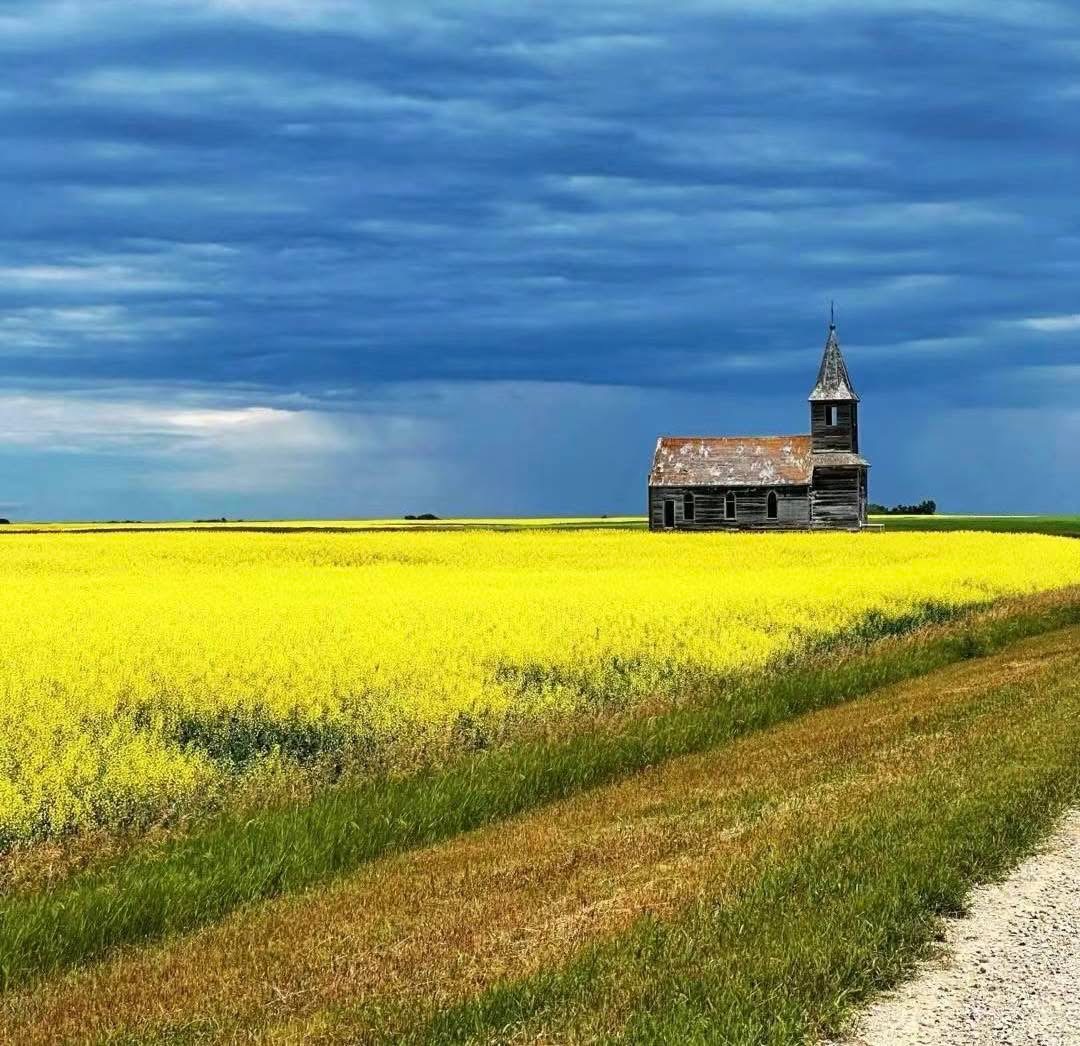
Canadian farmland - canola field

Canadian farmland · canola in bloom · Saskatchewan holds 40% of Canada's farmland
Chapter One

Saskatchewan's Land Identification System

Saskatchewan farmland uses a distinctive grid-coordinate identification system. Understanding it is the first step to communicating fluently with a farmland broker.

The Base Unit: the Quarter

The Quarter is the basic trading unit for Saskatchewan farmland. One Quarter equals 160 acres — roughly an 800m × 800m square. Four Quarters arranged in a 2×2 grid form one Section (a one-square-mile block).

NW
NE
SW
SE
1 Section = 4 Quarters
= 640 acres = 1 sq. mile
Dark gold SE = the parcel in our example

The Coordinate System: Township & Range

Township (the north-south coordinate) and Range (the east-west coordinate) together define a six-mile-square block containing 36 numbered Sections (1–36). Saskatchewan spans three meridians: W1, W2, and W3.

SE 10-37-15 W2
SE
Quarter (Southeast)
10
Section No.
37
Township
15
Range
W2
Meridian
The southeast Quarter of Section 10, at the intersection of Township 37 and Range 15 · 160 acres
📱 Locating Tool

Use the Prairie Locator app — enter the Section / Township / Range / Meridian, and it will pinpoint any parcel precisely on Google Maps.

RMs: Rural Municipalities

Saskatchewan's rural areas are divided into 296 Rural Municipalities (RMs) — the basic unit of land administration, and the key reference frame for analyzing rental rates.

📐
Typical RM Size
A roughly 18-mile square
🏡
Each RM Holds About
324 Sections, 1,296 Quarters
Example: Full RM Name
RM of Brokenshell No. 68
Number 68, named Brokenshell
💡 Why the RM Matters

Soil grade, average rental rates, and historical appreciation all vary RM by RM.
ExtrAcre holds complete rental auction data across every RM in the province, giving you RM-level market analysis instead of a rough province-wide average.

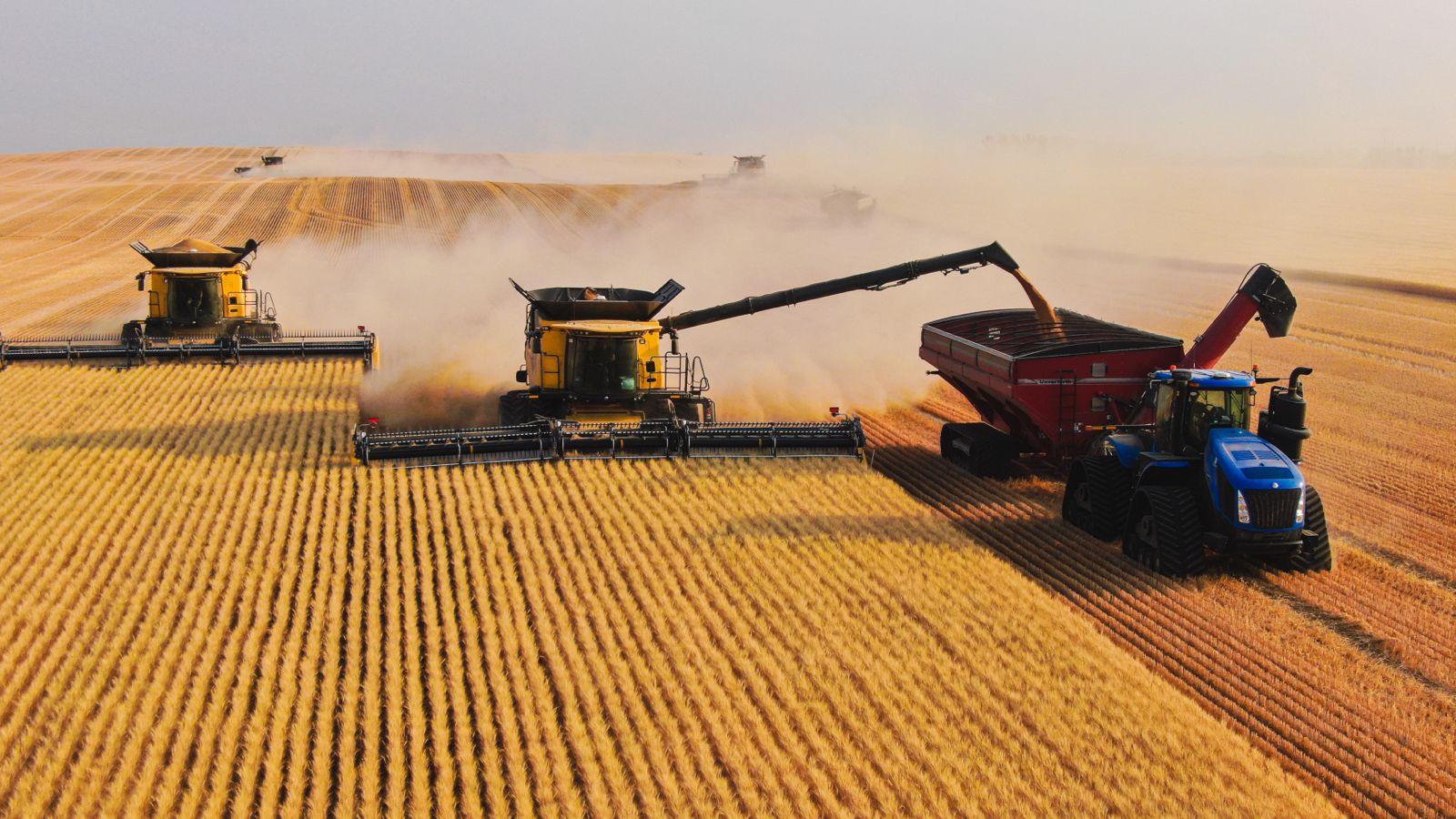
Combine harvester at work on Saskatchewan farmland

A combine harvester at work — farming scale and efficiency vary widely from one RM to the next

Chapter Two

Why Saskatchewan Farmland?

Two decades of steady, uninterrupted appreciation; roughly 40% of the nation's arable land; an entry cost a fraction of Ontario's — Saskatchewan farmland's long-term investment case rests on structural advantages, not short-term speculation.

+9.4%
SK average farmland
price gain, 2025 (FCC, March 2026 report)
+11%
Annualized CAGR
2005–2024, 20 straight years of gains
Increase in Saskatchewan
land values since 2012
40%
Share of Canada's total
arable farmland in Saskatchewan

2025 Appreciation & Average Price by Region

Region2025 GainAvg. Price (/acre)Price Range
Northeast+~12%~$4,800–$5,000$2,000–$6,200
Northwest+~12%~$3,500$1,700–$5,000
East-Central+~12%~$3,800
West-Central+4.8%~$3,500$1,900–$5,300
Southeast+Moderate~$3,200$1,900–$5,800
Southwest+Low~$2,600$1,400–$4,100

Source: Farm Credit Canada (FCC), 2025 Farmland Values Report, published March 2026

"At the average rent-to-price ratio of 2.9%, farmland worth $3,500 per acre would generate a yearly cash rent of about $100 per acre. The ratio has a wide range — from 1.6% all the way to 4.4%."

— Tim Hammond, Biggar, Hammond Realty, FCC 2025 report

How It Compares to Other Assets

SK Farmland (total return) ~12–13%/yr
S&P/TSX Composite ~8%/yr
Canadian REITs ~7%/yr
5-Year GIC / Bonds ~3–4%/yr
Saskatchewan vs. Ontario
SK Avg. Price
$2,600–$5,000/acre
ON Avg. Price
$17,000–$27,000/acre
SK Rent-to-Price
2.9% (FCC 2025)
ON Rent-to-Price
~1.2%
Chapter Three

How to Select Farmland

As an investor, land selection comes down to two dimensions: can it earn a reasonable return, and can it be rented out — and eventually sold — without friction?

💰 Criterion One: A Reasonable Return

MetricCurrent FigureNote
Average rental yield2.9%FCC 2025 average rent-to-price ratio
Rent-to-price range1.6% – 4.4%Varies widely by soil grade and RM
Annual rent on a
$3,500/acre property
~$100/acreFCC 2025 estimate
Capital appreciation (2025)+9.4%Province-wide average
Estimated total annual return~12–13%Rental yield + appreciation
📌 Rent vs. Financing Cost (2025)

Assuming a 25% down payment amortized over 25 years, the annual financing cost per acre runs more than $80 above the rental income (FCC data). The current recommendation is to buy with cash or low leverage and hold for the long term.

🎯 Criterion Two: Easy to Rent, Easy to Sell

Sufficient Size
For mid-quality land, a single rentable block should ideally be at least 640 acres (4 Quarters). The larger the parcel, the farther afield it draws bidding farmers from — and the higher the rent it commands.
Contiguous Blocks
Easier for farmers to operate mechanized equipment across, lowering their operating costs, sharpening bidding competition, and producing more competitive rents.
High Soil Grade
Good land (high SCIC grade) still leaves a farmer with margin even in low-price, dry years — it will never sit unrented. Poor land may be refused by farmers altogether when conditions turn unfavorable.
Avoid Isolated Small Parcels
A small parcel surrounded entirely by one farmer's land puts all the leverage in his hands — he may lowball you, or even pressure you to sell cheap "or else."
⚠️ The Risk of Poor Land

Because poor land yields less, in years of low grain prices its output may fall below a farmer's break-even cost — at which point nobody will rent it, even for free. And if farmland sits idle and overgrown, the government will step in and mandate weed control at your expense, typically around $4,000+ per year.

Chapter Four

How to Value Farmland

Two broad categories of factors drive farmland value: farming efficiency (which determines operating cost) and productive capacity (which determines total crop output value). Together, they set both the rental rate and the market price.

① Farming Efficiency Factors

These factors determine how costly the land is to farm under normal operation (excluding input costs like seed and fertilizer).

Slope Rating
T1 flattest → T5 steepest
T1 is best
Stone Rating
S1 fewest stones → S5 most
S1 is best
Wasteland Share
Sloughs/wetland/brush/saline
Lower is better
📡 Tools for Assessing Wasteland

Google Earth satellite imagery, aerial photography, or drone footage can map out the wasteland (sloughs, wetlands, bush) on a parcel, letting you compare it against the cultivated area and calculate the true farmable percentage.

② Productive Capacity Factors

These determine the total economic value of crops a parcel can produce over a full normal crop-rotation cycle.

🌑
Soil Colour
Black > dark brown > brown > pale
darker means more organic matter
💧
Water Retention
Sandy / loam / clay
thicker topsoil resists drought better
🌧️
Climate Factors
Rainfall amount and timing
frost-free days, natural disaster risk
🌿
Suitable Crops
Land that can grow canola
commands the highest rent premium
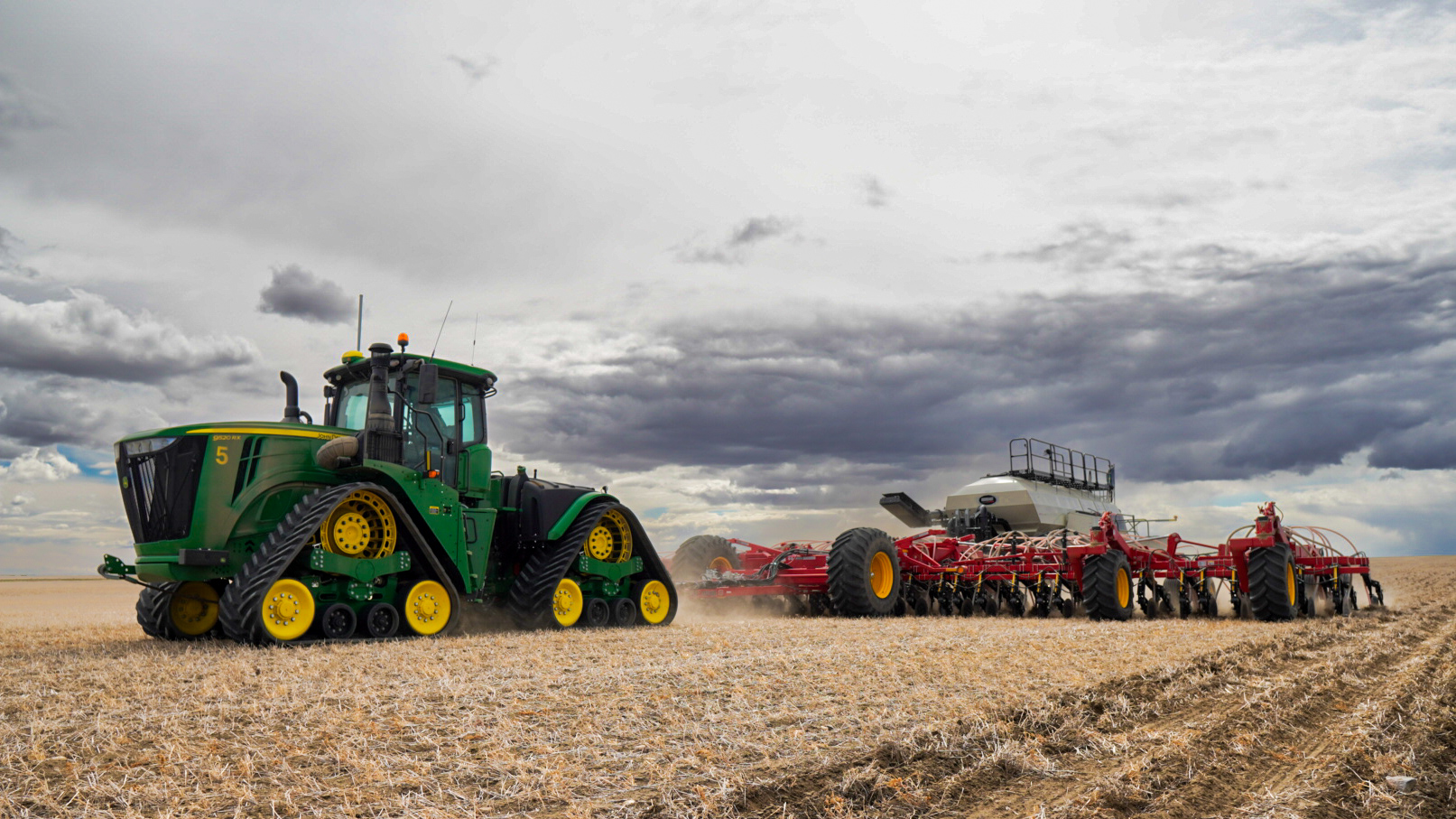
Spring seeding operation

Spring seeding — the crops a parcel can support directly shape its rent premium

Quick Assessment Tools: SCIC Soil Class & the SAMA Final Rating

SCIC Soil Class (Productive Capacity)
  • 🏛️ SCIC = Saskatchewan Crop Insurance Corporation, which assigns a soil class to every Quarter
  • 🔤 Grades run alphabetically: A highest → P lowest
  • 🌧️ Weighs both inherent soil fertility and regional climate (mainly rainfall)
  • Grade H and above: solid quality, well suited to cropping
  • Below grade L: not well suited to crop production
SAMA Final Rating (Capacity + Efficiency)
  • 📊 The SAMA Final Rating combines productive capacity and farming efficiency into one score
  • 📌 Mid-quality Saskatchewan farmland typically scores around 50
  • ⚠️ Portions rated below 30: not suitable for grain production
  • 🔢 A single Quarter often contains several differently-rated portions
  • ⚖️ The overall score should be calculated as an area-weighted average
Reading a SAMA Report — Qtr SW, Sec 26, Tp 24, Rg 25 W2
RM of Sarnia · 157 acres · Assessment ID: 221-001026400
2021 frozen assessment
Soil Type
Chernozemic
Soil Texture
L – Loam
Slope Rating
T1 – Level/Nearly Level
Land Use Acres $/Acre Rating Weighted Contribution
K – Cultivated65$1,47454.86=65/85 × 54.86
K-S – Cultivated, scattered20$82130.56=20/85 × 30.56
N – Non-cultivable72excludedexcluded
Weighted average (cultivable)85≈47.9← overall rating
📖 Key Takeaway

This Quarter totals 157 acres, but only 85 acres (54%) are actually cultivable, producing a weighted rating of roughly 47.9 — slightly below the provincial average of 50. The 72 non-cultivable acres (which include a cemetery, in this case) should be discounted in any valuation. Always work out the true cultivable-acre ratio before buying.

Chapter Five

Rental Structures & Rates

Depending on how risk is shared, farmland rental falls into two main structures: fixed cash rent and crop share. The overwhelming majority of investors choose fixed cash rent — it's the simplest and most stable income stream.

💵
Fixed Cash Rent
The landowner collects a fixed cash amount each year, regardless of that season's harvest. Lowest risk, most stable income — the right fit for the vast majority of investors.
2025 Rental Benchmarks (FCC)
Provincial avg. rent-to-price 2.9%
NE/NW black-soil zones $120–$160+/acre
West-central dark-brown zones $100–$140/acre
SW brown-soil zones $45–$90/acre
ExtrAcre auction results 10–30% above private deals
🌾
Crop Share
The landowner takes a percentage of the harvest (or its cash equivalent), sharing risk with the tenant farmer. Higher upside in good years, but requires more hands-on involvement.
Typical Share Range
Current share range 16% – 20%
Canola Tends toward the higher end
Landowner involvement Higher — requires oversight
Best suited to Investors with farm background
📅
Lease Term
Typically 3–5 years, matching crop-rotation cycles. Longer leases benefit both sides: tenants can plan ahead, and landowners reduce the risk of vacancy.
💳
Payment Schedule
Typically split into two payments:
• Spring (April or May) — 50%
• Fall (October or November) — 50%
📋
Lease Timing
Saskatchewan's farming season runs April through November. Lease start and end dates should avoid falling within this window to prevent disputes mid-season.

How to Choose a Tenant Farmer

🤝
Track Record & Integrity
Honours agreements and pays on time. Check references from other landowners and review their rental history.
🚜
Scale & Growth
A larger, growing operation has the capacity to invest in modern equipment and the intent to farm the land for the long haul.
⚙️
Equipment & Know-How
Modern, well-maintained machinery, paired with strong agronomic experience and crop-rotation discipline.
📍
Proximity
A nearby farmer keeps transport costs down, responds faster, and tends to pay closer day-to-day attention to the land.
📜
Long-Term Agreements
A 3–5 year lease supports sustainable use of the land and steady year-over-year improvement — a win for both parties.
ExtrAcre's Vetting
Every bidding farmer submits a complete Renter Profile, which the landowner reviews before deciding — weighing price and quality together.
Chapter Six

Land Management Can't Be an Afterthought

Many investors buy land and then more or less forget about it. But farmland is no different from real estate in this respect — poor use and neglect can seriously erode its value, and the cost and time required to repair that damage are substantial.

⚠️ Core Risk Warning

The market value gap between well-managed and poorly-managed farmland can exceed 20%. Land in particularly poor condition may need 3–5 years of careful rehabilitation to return to normal, during which time it requires heavier-than-usual spending on pesticides, fertilizer, and herbicides.

Common Land Management Problems

🌿 Weed Infestation
Some farmers profit primarily through crop-insurance claims — seeding lightly, applying almost no fertilizer, and letting weeds take over half the field, doing serious long-term damage to soil fertility.
⚡ Exploitative Farming
Short-term tenants who farm unsustainably — taking from the land without putting anything back — create compounding problems: pests, soil compaction, and loss of organic matter.
📉 Declining Fertility
Years without organic amendments or micronutrient replenishment lead to topsoil weathering and loss of organic matter, dragging yields down year after year.
🏛️ Mandatory Government Weed Control
If farmland is left idle and overgrown, the government will step in and arrange weed control on your behalf — at a cost of roughly $4,000 or more per year, billed entirely to the landowner.

Why Good Land Never Sits Idle

"Good land holds up in both drought and flood — that's precisely why it never struggles to find a tenant. That reliability is the real foundation of value preservation and growth."

— Robin Liu, ExtrAcre Farmland Inc.
  • Good land: high yields mean that even in a year of low prices or poor rainfall, the harvest still covers a farmer's break-even cost, leaving enough margin to support the rent. The rent might be slightly lower, but it will always find a tenant.
  • Poor land: low yields mean that in a weak-price year, output may fall short of even the break-even cost of farming it. At that point, no farmer will take it on — not even rent-free.
📋 What ExtrAcre's Management Service Covers

• Annual on-site inspection and condition reports
• Full oversight of lease compliance
• A sustainable plan for steady land-quality improvement
• Early warning and guidance on emerging issues

harvested wheat stubble field

A field after harvest — regular inspections keep land in good standing year after year

Chapter Seven

The ExtrAcre Edge

Canada's first online farmland rental auction platform, with 250+ completed auctions. Bidding is fully transparent and prices are set by the market — typically 10–30% above private negotiation.

🌐
A Canadian First
Canada's first online farmland rental auction platform (launched 2016), with 250+ completed auctions covering all of Saskatchewan, generating a deep store of RM-level market data.
📊
Transparent Bidding
Open online bidding sets the price — not a private negotiation. Every bidder sees the current high bid in real time, eliminating information asymmetry.
👥
A Deep Farmer Network
Our database of farmers spans every region of Saskatchewan, letting us reach the strongest bidders quickly — including tenants from neighbouring RMs you'd never reach on your own.
Renter Profile
Every bidding farmer submits a complete profile — experience, equipment, financial standing, references — for the landowner to review before deciding. Price and quality, both accounted for.
🔔
Soft-Close Technology
Our proprietary Soft Close extends the auction by five minutes after every late bid, eliminating last-second sniping and giving every bidder a fair chance to respond — producing a genuinely market-clearing price.
🤝
End-to-End Service
From purchase, to locking in a tenant before closing, to ongoing lease management and eventual sale — we handle the entire process so you never have to deal directly with tenant farmers.

"ExtrAcre uses an online bidding mechanism to lease farmland — efficiently, fairly, and transparently establishing the true market rent for your land. It's the closest thing to real market price discovery available in Saskatchewan today."

— Robin Liu, Founder, ExtrAcre Farmland Inc.

Our Core Team

Robin Liu
Robin Liu
Licensed Auctioneer · Founder, ExtrAcre
Licensed Auctioneer #507581, focused for years on Saskatchewan farmland rental auctions and management.
(306) 690-6786 · WeChat: L6906786
Qing Zhang
Qing Zhang
Realtor · Farm & Farmland Sales Specialist
Royal LePage Next Level Regina, ranked #2 in Saskatchewan sales (2021–2023).
(306) 684-0136 · WeChat: L6840136

Ready to Understand Your Land's Value?

Whether you're considering an investment in Saskatchewan farmland or want a clearer read on the market rent for land you already own — ExtrAcre offers a free rental appraisal, with no fee unless we succeed, and no pressure either way.